The Crowded Room
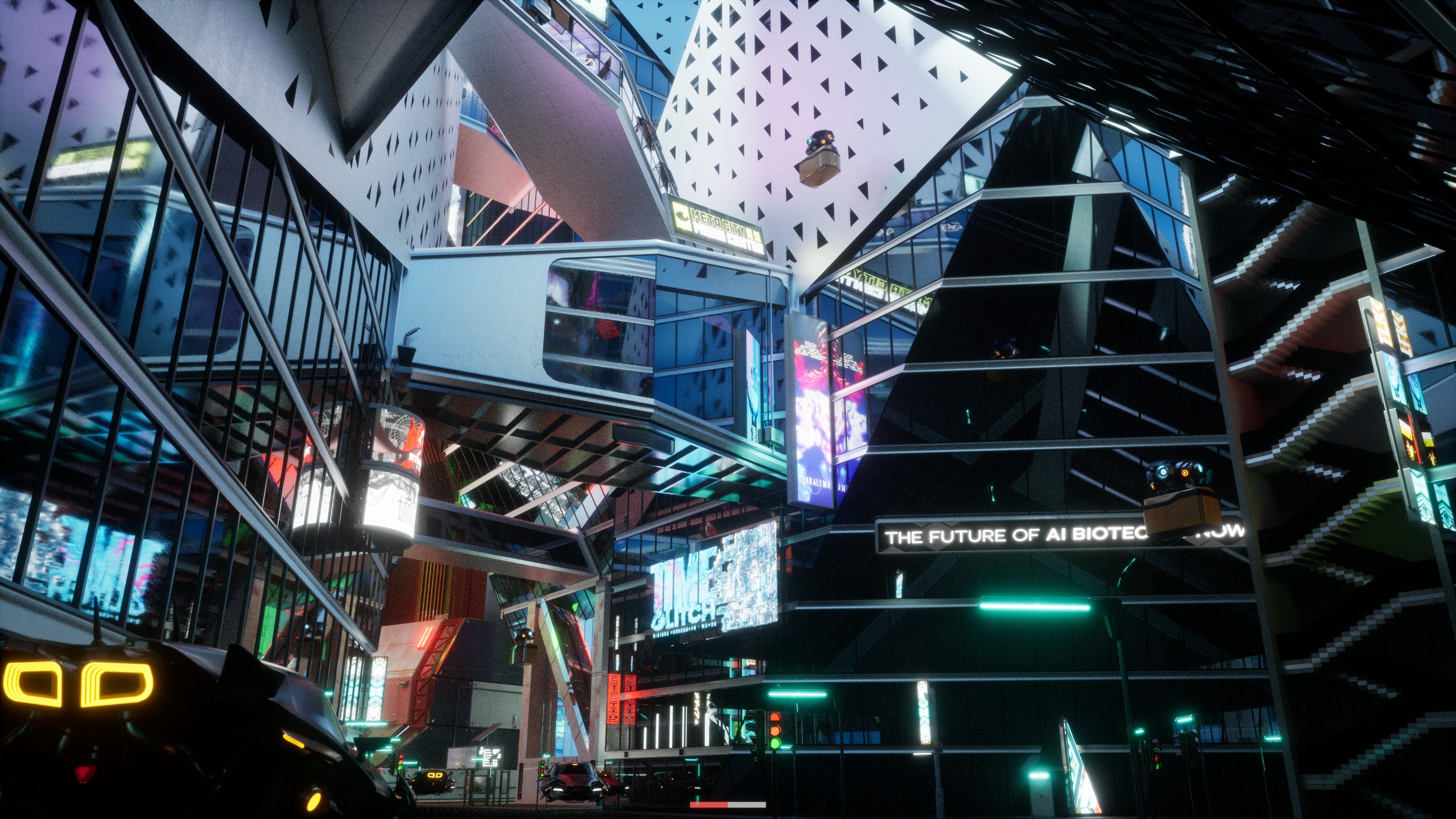
The project explores a future AR-hybrid city where transport systems, digital events, media, and shared AR experiences begin competing for the same ground plane. In response, AR-based public life is moved vertically into building voids, elevated floors, and bridge connections. These typologies are developed as minimal design concepts, allowing them to be adapted across different building designs and urban contexts.
Client
Manchester School of Architecture
Year
2026
Category
Future AR Hybrid Cities

/// FUTURE AR HYBRID CITY SCENARIO
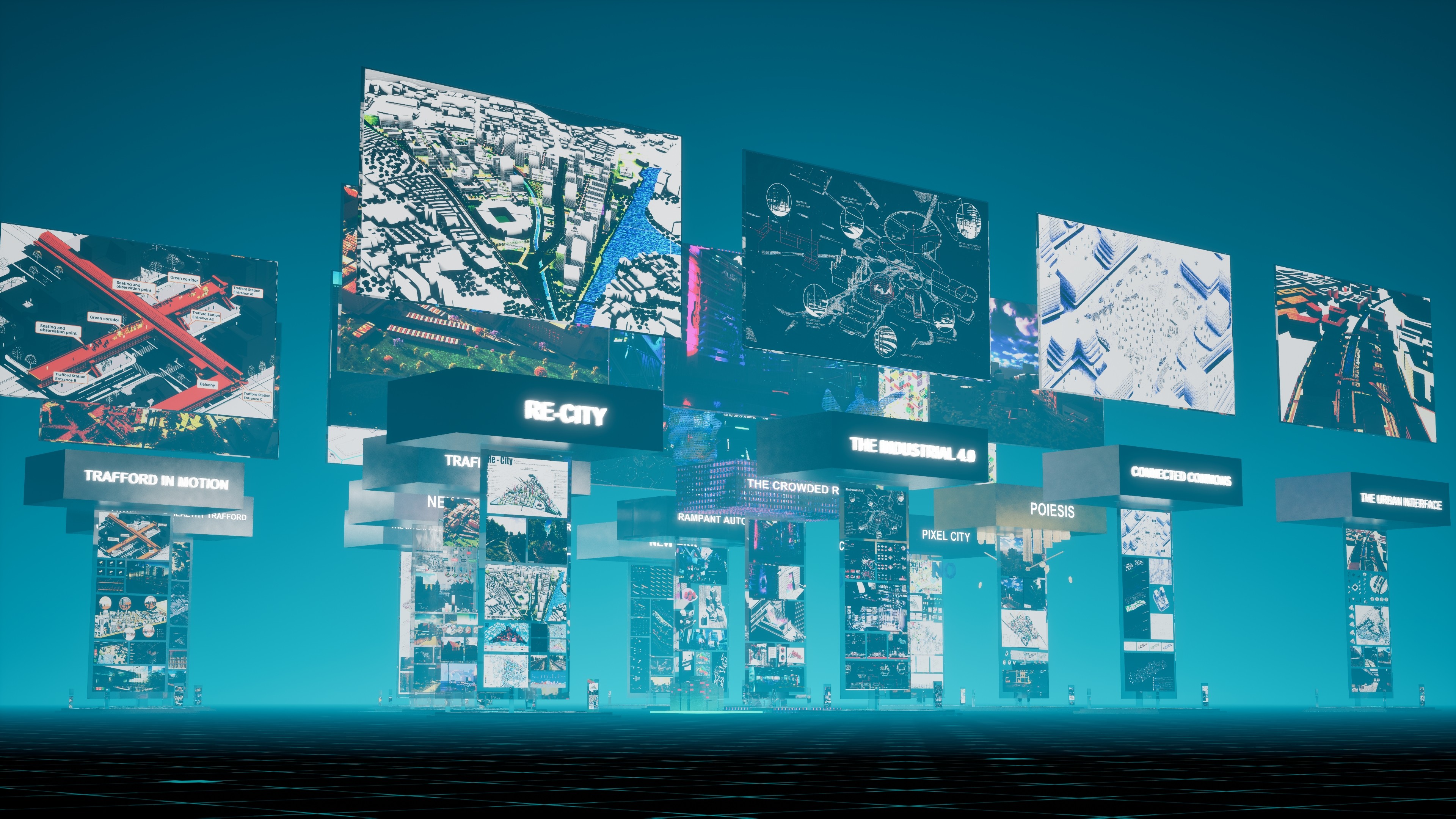
/// For Studio 3, the thesis focuses on a dense cluster within the city, developed as The Entertainment District. This area uses cultural, leisure, mixed-use, and event-based programmes to test how AR social activity can be experienced architecturally. Through refinement of my computational iteration, spatial refinement and resolution, and film-making, the project communicates a journey from the ground plane into an elevated AR network, showing how future cities can support both efficient movement and immersive digital public life.

/// This thesis investigates the “crowded room problem” within a future AR-hybrid city, where augmented reality improves the legibility of transport and movement systems while simultaneously introducing new forms of public activity, media, advertising, performances, and shared digital experiences. The conflict emerges when these digital and physical systems compete for the same ground plane, causing streets to become overloaded with movement, information, and AR occupation.

COMPUTATIONAL DESIGN INTERVENTION
/// The project responds by reorganising AR activity vertically, creating new spatial capacity within building voids, elevated public floors, bridge connections, rooftop event spaces, and broadcast typologies. Rather than removing AR from the city, the proposal gives it architectural space to operate, allowing digital social life to thrive while reducing conflict with ground-level movement, greenery, and public space.