Biomorphism Study
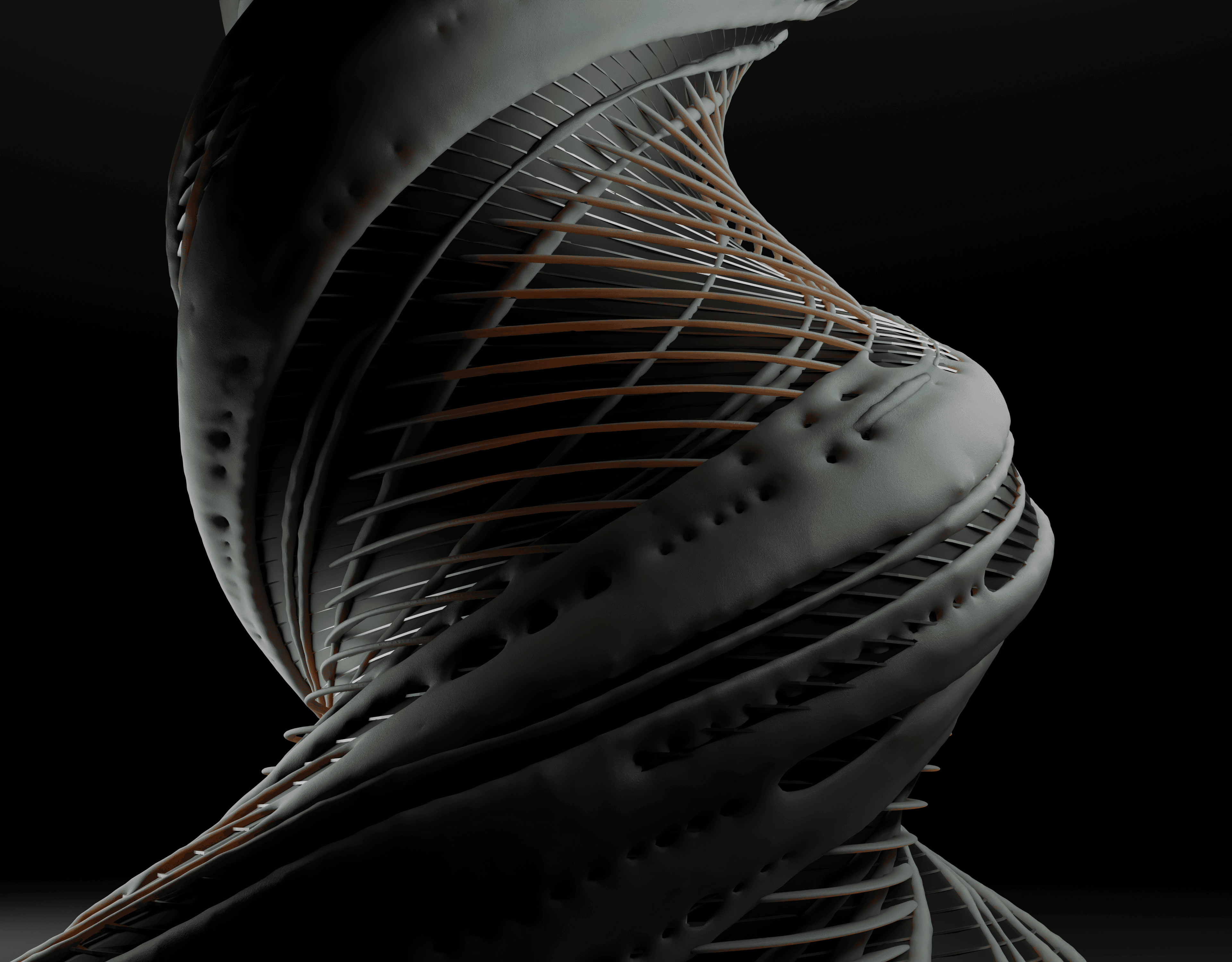
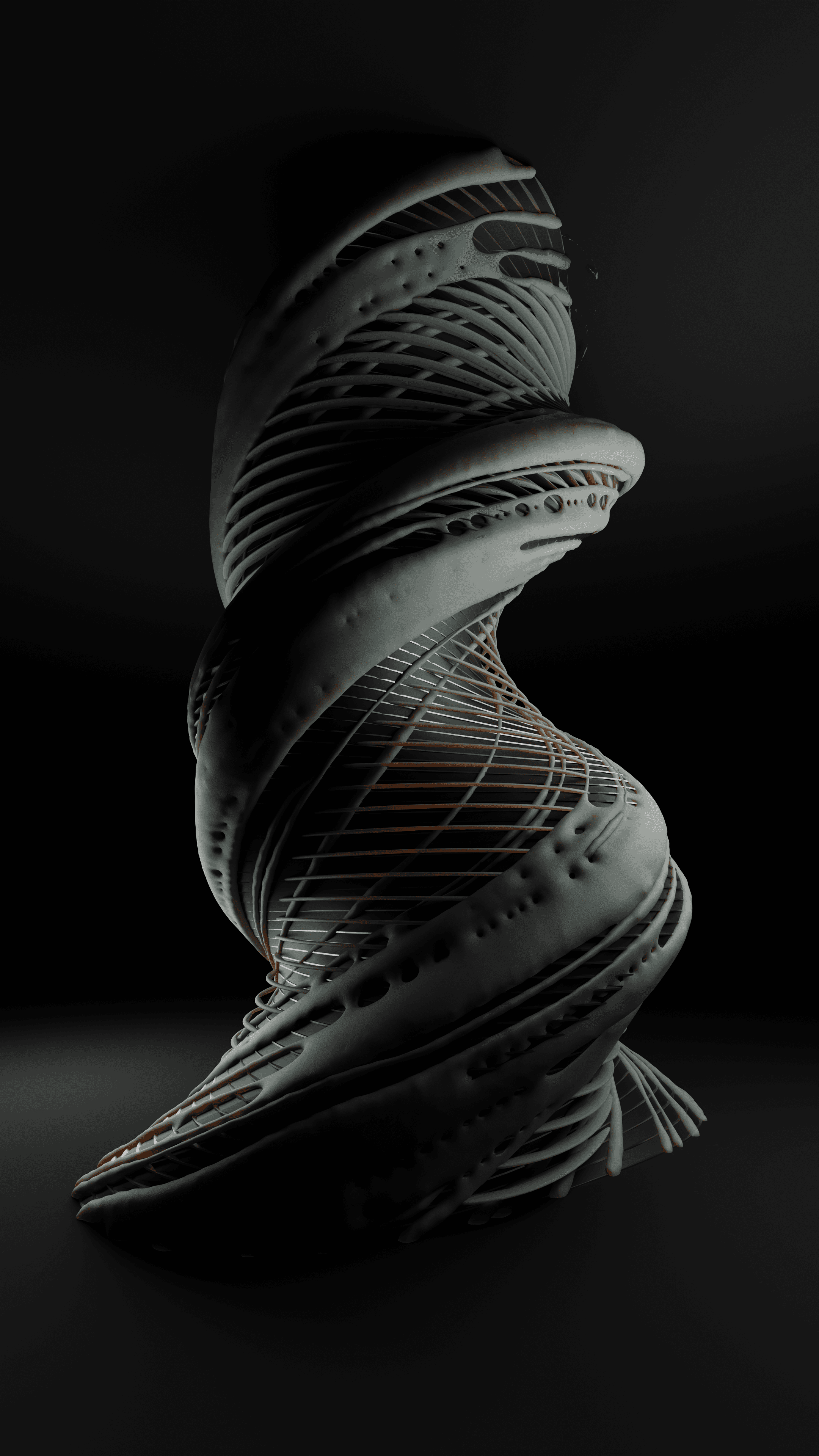
Biomorphism Study is a computational form-finding experiment exploring how organic architectural geometries can be generated through rule-based design processes. Categorised under Computational Biomorphic Architecture, the study investigates how stacked spatial profiles, twisting structural ribbons, layered ribs and secondary connective systems can combine to create a form that feels both biological and architectural. The project was developed as a study in controlled complexity. Rather than creating a random organic object, the geometry is built from a set of related computational rules that organise height, rotation, taper, rhythm and repetition. The result is a sculptural architectural body that suggests movement, growth and structural tension, while still retaining a sense of vertical organisation, floor plates and inhabitable space.
Year
2026
Scope
Architecture
Client
TK
Category
Computational Biomorphic Architecture
The study was developed through a computation based workflow, using Grasshopper as the main generative environment. The geometry was created through custom AI-coded components that translated biomorphic rules into a controllable architectural system. Rather than copying a natural organism directly, the script abstracted biological principles such as growth, tapering, twisting, rib formation, skeletal layering, cellular openings and crown-like extension into generative architectural logic.
The base form begins with a series of stacked spatial profiles, which act like repeated sectional “growth rings” through the height of the object. These profiles are shaped by parameters including height, footprint, twist, taper, asymmetry and resolution. This creates a controlled vertical body that can behave like a tower, sculpture or architectural mass while still retaining walkable floor logic.
From this primary body, the system generates several biomorphic layers. Larger sweeping ribbons wrap around the form like muscular or tendon-like structures, creating the main sculptural gesture. Secondary ribs follow the surface logic of the profiles, giving the object an exoskeletal quality similar to bone structures, shells or organic frameworks. A finer connective web is then generated between levels, producing a lightweight network that suggests veins, fibres, neural pathways or structural tissue.
After the initial generation in Grasshopper, the model was refined through Rhino and Blender. Rhino was used to assess the geometry architecturally, test the relationship between floor plates, ribs and envelope systems, and prepare the output for further development. Blender was used to sculpt and enhance the biomorphic qualities of the form, smoothing the organic ribbons, refining surface depth, developing materials and producing atmospheric visualisations.
Overall, the workflow explores biomorphism as a generative design method. Biological behaviours are translated into computational rules, allowing the architecture to emerge through controlled growth, repetition, variation and layered structural systems.